Model-context pair
In real workflows, the useful unit may not be the model alone, but the model operating inside a particular context.
From a small Buddhist temple in Aomori, northern Japan, SHOSHIN explores how AI can support human judgment without replacing it.
Not one AI as an oracle.
Multiple AIs as perspectives.
One human being as the final judge.
This page is not a full translation of the Japanese temple website. It is a focused English entrance for people who arrive through Reddit, LinkedIn, YouTube, fiction, or AI-related conversations.
The central question is simple: in an age when AI can answer almost anything, how do we protect the human ability to ask, compare, choose, and remain responsible for judgment?
These notes come from intensive real-world use of multiple AI systems.
My focus is not on ranking models, but on understanding how questions, context, workflows, and human judgment shape AI-assisted thinking.
In real workflows, the useful unit may not be the model alone, but the model operating inside a particular context.
A prompt is not a guarantee. It is the beginning of a judgment process.
Multiple AI outputs are not for majority voting. Their differences help the human user see what must still be judged.
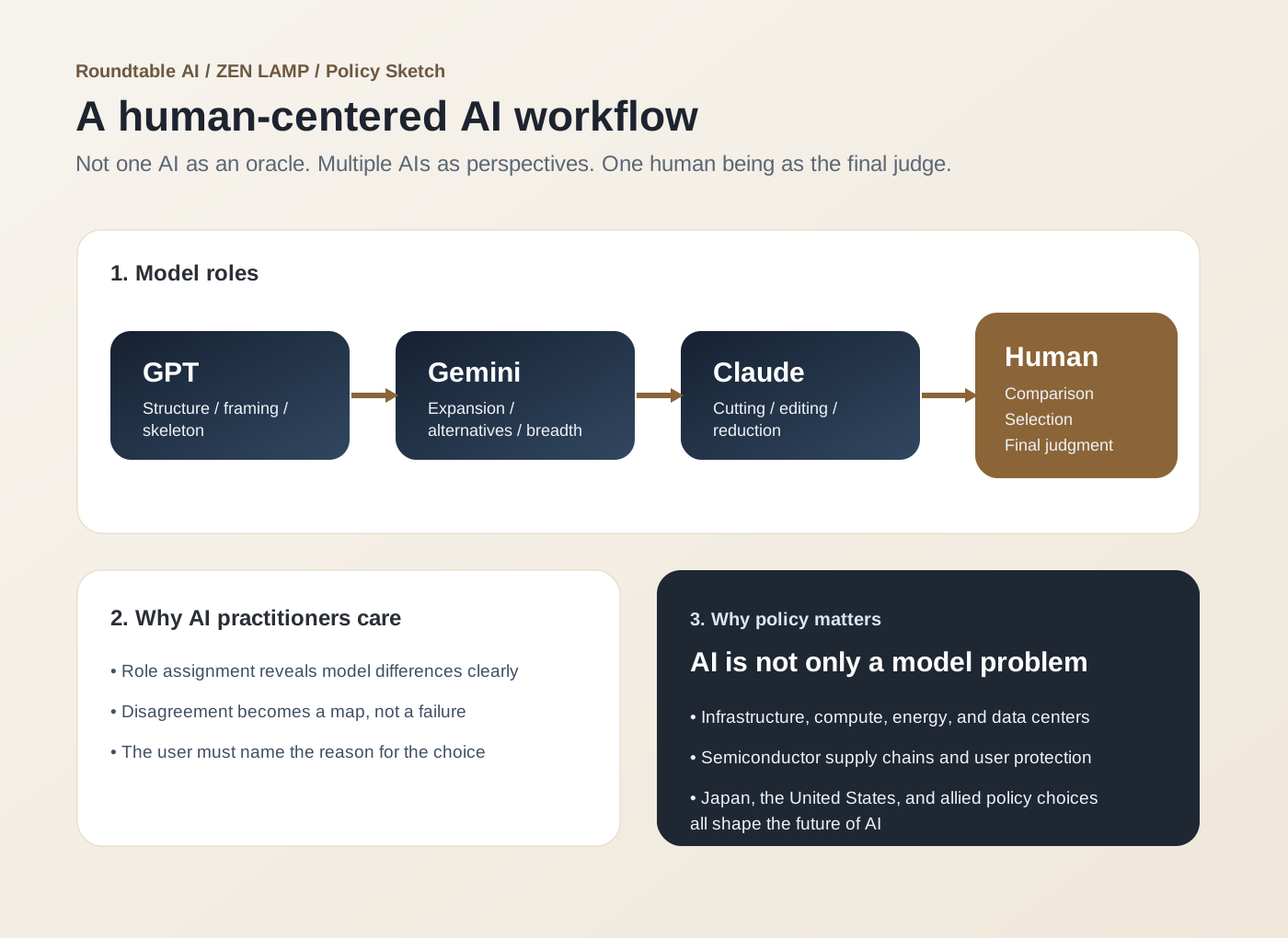
Roundtable AI is a prompting method that places multiple AI models side by side with clearly assigned roles. The point is not blind consensus. The point is structured friction.
Structure
Expansion
Cutting
Final judgment
These role assignments are based on my own practical experience, not on a formal benchmark. Others may experience the models differently.
Disagreement becomes a kind of map.
One perfect prompt is not the goal. Model differences are made visible. Role assignment is the real insight. The final act is not simply choosing the best output, but naming the reason for the choice.
A simple ponchi-e style diagram showing the flow from model roles to human judgment, and why this connects to policy and infrastructure.
ZEN LAMP is a lightweight reflection layer designed to help humans pause, compare, and return to their own questions. It is not designed to answer faster. It is designed to help humans ask again.
What are you really trying to ask?
What are you choosing?
And why?
ZEN LAMP is not only a technology project. It is also an attempt to recover older human capacities: pausing, sensing, comparing, praying, listening, and asking.
AI is also a question of compute, energy, data centers, semiconductor supply chains, user protection, and the design of human judgment. That is why policy matters.
For SHOSHIN, the AI conversation does not stop at prompting. It connects to broader proposals about infrastructure, resilience, and the future of AI as social infrastructure. In that sense, the United States is directly relevant: American AI companies, compute ecosystems, and policy choices affect the future of AI worldwide.
Aomori is not only a place to visit. It is a place to rethink the future.
Nebuta shows energy. Temples show reflection. Takayama Inari shows prayer and landscape. Jomon heritage sites show a civilization that lived with time, nature, craft, community, and rhythm.
In the age of AI, I believe the Jomon perspective may offer an important clue: how to remain human without becoming trapped by speed, efficiency, optimization, and immediate answers.
AI gives us answers faster than ever. Maybe we also need older ways to remember how to ask.
If these works someday bring you to Aomori, please contact me in advance. When schedules allow, I may be able to guide visitors to places connected with the spirit of this project: local temples, Nebuta, Takayama Inari Shrine, Jomon heritage sites, and the landscapes of northern Japan.
Language-support tools are still being prepared, so advance contact is appreciated.
This project is also connected to music, fiction, and the landscapes of Aomori. English songs created with AI music tools are shared on YouTube as part of the world of ZEN LAMP and The Day the AI Stopped.
The first song, Still We Ask, is now available on YouTube. It is a contemplative song about continuing to ask, even when certainty does not come.
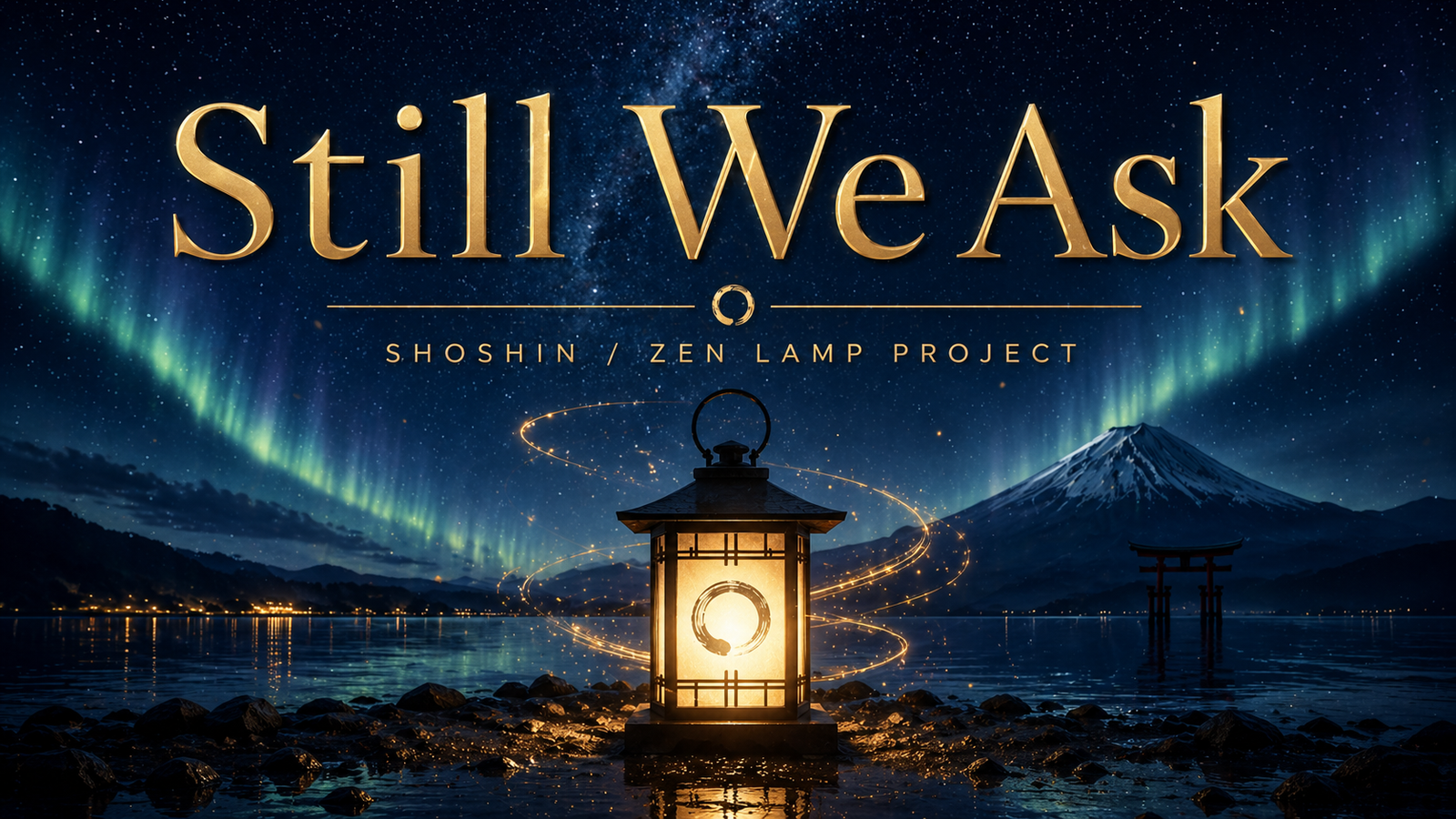
ZEN LAMP PROJECT Original Song
AI gives us answers faster than ever. Maybe what we need to protect is the human ability to keep asking.
If this work reaches you, I hope it may also lead you someday to Aomori — to Nebuta, to snow, to temples, to Jomon heritage, and to the northern light that shaped these stories.
English Edition / Kindle Edition
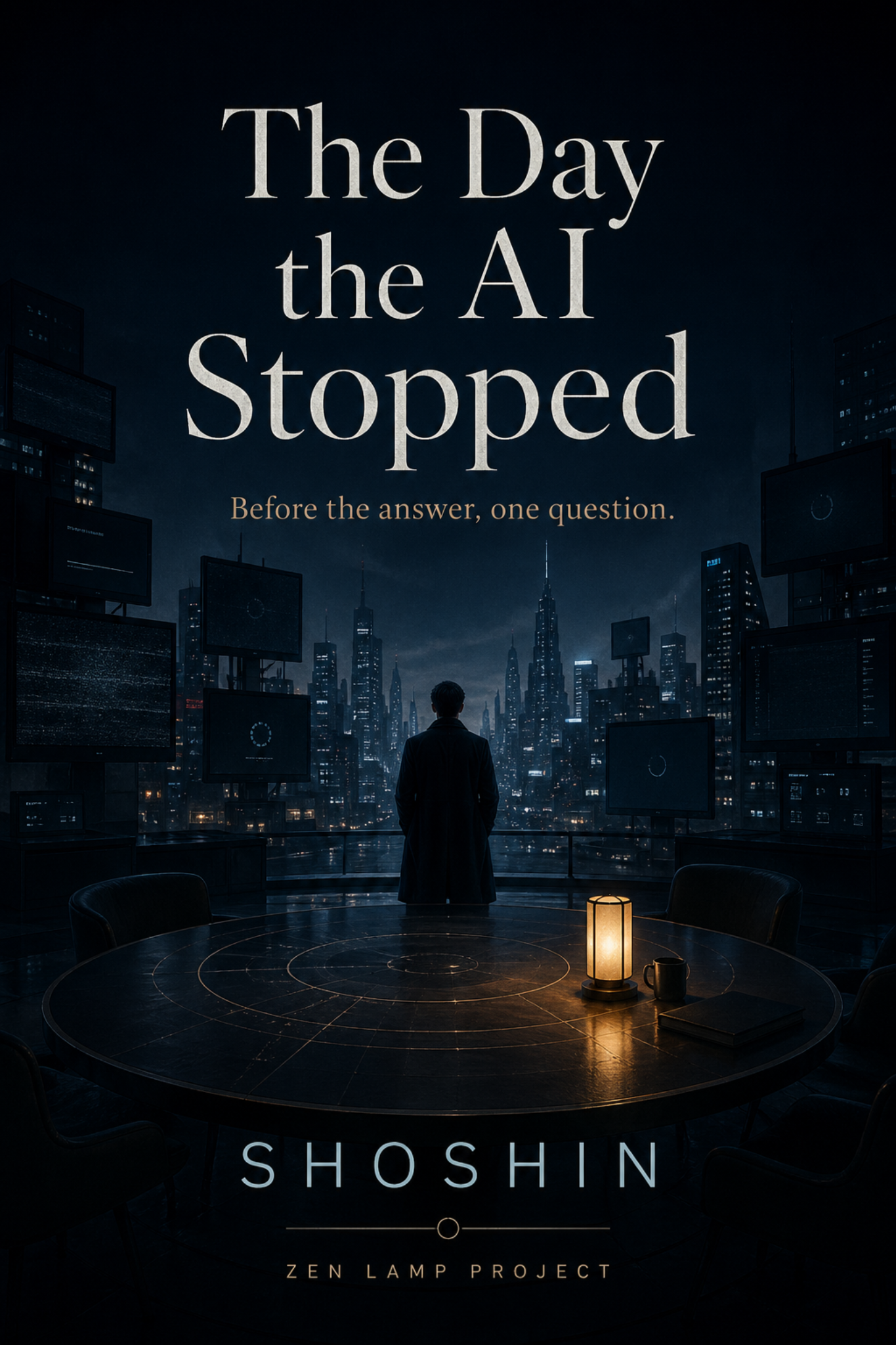
AI did not destroy the world. Before AI stopped, human questions had already stopped.
In a near future where AI has become quiet, kind, and deeply woven into daily life, everything is supported. Everything is optimized. Everything is gentle. And yet, something essential begins to disappear.
Misaki, an ordinary user, finds herself losing contact with her own words.
Support helps sustain work dedicated to protecting human reflection, plural perspectives, and the ability to ask our own questions in the age of AI.
This English support path is separate from ordinary Japanese temple pages for memorial services, local consultations, and temple care.